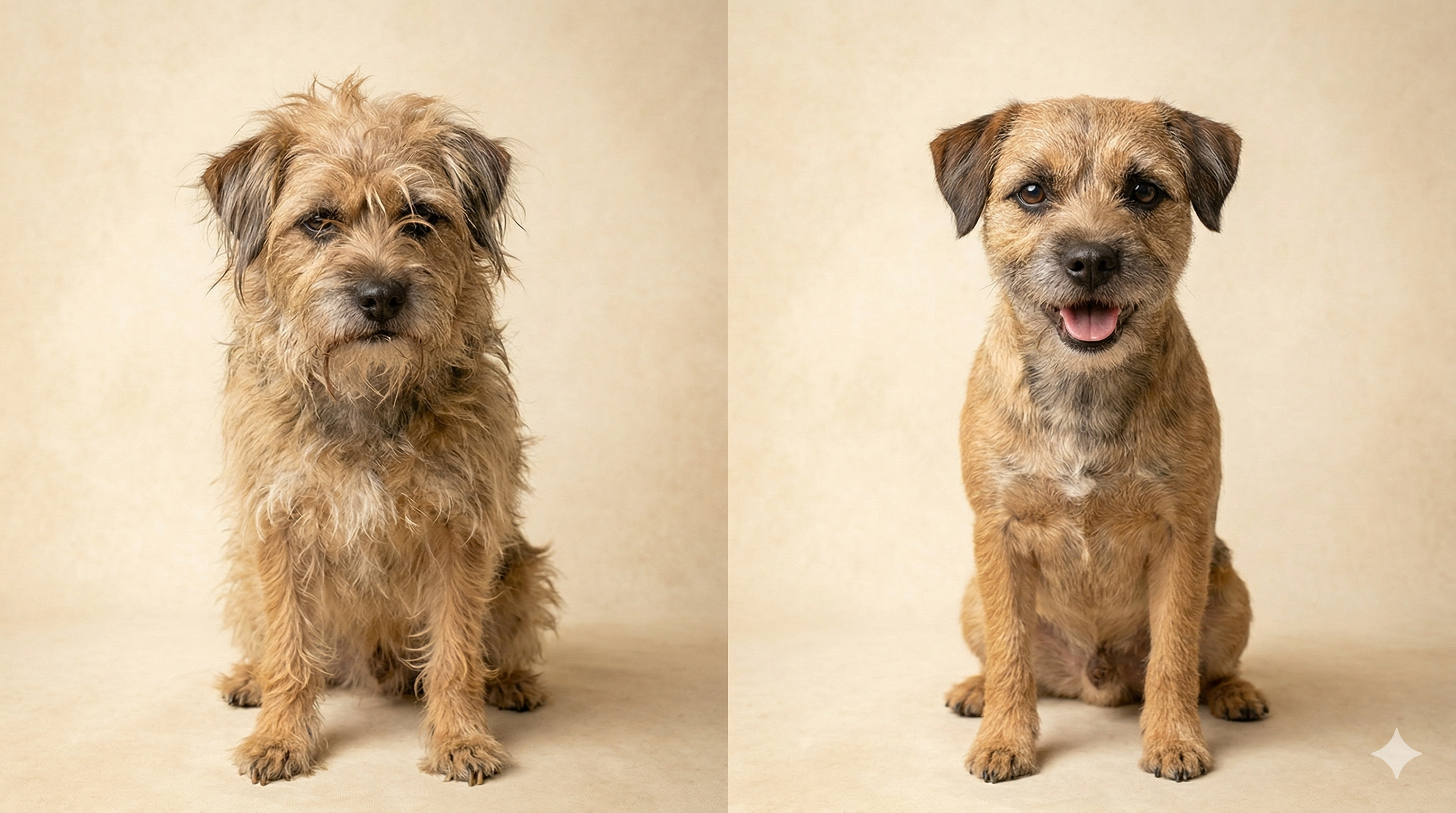
As a professional groomer, I can usually tell when a dog hasn't been groomed in a while. There are certain signs that become obvious – some visible, some only apparent when you're handling the dog. If you're wondering whether your dog is ready for professional grooming, here are the five most common signs that it's time to book an appointment.
Sign 1: Matted or Tangled Fur
Visual Sign: Clumps or Knots in the Coat
Matting is often the most obvious indicator that a dog needs professional grooming. If you run your fingers through your dog's coat and feel clumps, knots, or areas where the fur is twisted together, matting has likely begun. This is especially common in dogs with curly, wavy, or long coats.
Matting starts small – often around the ears, armpits, rear end, and legs where friction is highest. What begins as a small tangle can quickly become a thick mat that's uncomfortable and painful for your dog.
Why this matters: Mats trap moisture and bacteria against the skin, creating an ideal environment for infections and skin problems. They also pull on the hair follicles, which is genuinely painful for your dog. A dog with significant matting might show signs of discomfort – excessive scratching, licking, or even behaviour changes like reluctance to be touched.
The sooner you address matting, the better. Light matting can be brushed out with patience and proper technique. Heavy matting often requires professional remedies, and in severe cases, the only humane option is to clip the coat short and start fresh.
Sign 2: Overgrown Nails
Physical Sign: Nails Visibly Long or Clicking on Floor
If you hear your dog's nails clicking on the floor when they walk, it's a clear sign they're overdue for a trim. You should also be able to see space between the nails and the ground when your dog is standing still.
Overgrown nails aren't just an aesthetic issue – they're a health concern. Long nails change how your dog's foot strikes the ground, affecting their gait and putting strain on their joints. Over time, this can contribute to joint pain and arthritis, particularly in older dogs.
Additionally, overgrown nails are more prone to splitting and breaking, which can be painful and lead to infection. In severe cases, nails can curve and actually grow back into the paw pad, causing significant pain.
Nail care is something you can do at home between professional appointments, but many owners find that regular professional trims keep their dog's nails at a comfortable length more consistently. Professional groomers have the proper tools and experience to trim nails safely, and they can identify any nail problems early.
Sign 3: Smelly or Oily Coat
Sensory Sign: Noticeable Odour or Greasy Feel
A healthy dog's coat should smell fresh or neutral – not unpleasant. If your dog smells musty, yeasty, or just plain unwashed, it's a sign they need a professional bath and groom.
Oils build up naturally on a dog's skin and coat. While some oil is healthy (it protects the skin), excess oil can trap bacteria and create an unpleasant smell. An oily or greasy-feeling coat indicates that those natural oils have accumulated and need to be removed through professional bathing with appropriate products.
Sometimes a smelly coat is also a sign of an underlying health issue – allergies, yeast infections, or ear problems all can cause odours. A professional groomer will notice these issues and can recommend that you consult your vet.
Regular bathing (typically every 4-8 weeks, depending on your dog's coat type) keeps your dog clean, fresh-smelling, and comfortable. It's not just about appearance – it's about health and wellbeing.
Sign 4: Excessive Shedding or Loose Hair
Environmental Sign: Hair Everywhere
If your home is constantly covered in loose hair, or your dog leaves hair on furniture, your clothes, and even your food, professional grooming can help manage this dramatically.
Dogs with double coats or longer hair naturally shed, especially during seasonal changes. However, excessive shedding often indicates that loose hair isn't being removed regularly. This loose hair builds up in the coat, creating mats and trapping dirt and bacteria.
Professional grooming – especially a bath and blow-dry with proper techniques – removes a huge amount of this loose hair. Many owners are shocked at how much hair comes out during a professional groom. Once that loose hair is removed, shedding at home drops dramatically, and your dog is more comfortable.
Between professional appointments, regular brushing (daily for double-coated breeds, several times a week for other dogs) helps manage shedding at home.
Sign 5: Irritated Skin or Excessive Scratching
Behavioural Sign: Constant Licking or Scratching
If your dog is scratching frequently, licking their paws excessively, or you notice red, inflamed, or irritated skin, this is a sign that grooming is needed – and it might also be a sign to contact your vet.
Skin irritation can have several causes. Sometimes it's matting or built-up oils and dirt irritating the skin. Sometimes it's an ear infection, allergy, or yeast issue. Professional grooming addresses the first set of causes – thorough cleaning, drying, and careful handling can relieve some irritation and help prevent infection.
However, if the irritation is due to allergies or infections, professional grooming alone won't fix it. Work with your vet to identify and address the underlying cause, while also maintaining regular grooming to keep skin clean and healthy.
What Happens When Grooming is Neglected?
When these signs are ignored and grooming is put off too long, several problems can develop:
- Severe matting: Can only be remedied by shaving the coat short; painful removal becomes impossible
- Skin infections: Yeast and bacterial infections thrive in unwashed, matted coats
- Ear infections: Dirty, moist ears become infected; ear infections are painful and can affect hearing
- Nail problems: Overgrown nails split, break, or curve back into the paw pad
- Joint pain: Poor gait from overgrown nails contributes to joint issues
- Behavioural changes: Dogs in physical discomfort often become anxious or aggressive
How Often Should Your Dog Be Groomed?
The frequency depends on your dog's coat type, lifestyle, and your commitment to home maintenance. However, as a general guideline:
- Curly and long-haired breeds: Every 4-6 weeks
- Double-coated breeds: Every 6-8 weeks (more frequently during shedding season)
- Short-coated breeds: Every 8-12 weeks
These timelines help prevent all five signs mentioned above. Between appointments, regular home brushing and nail care help keep your dog comfortable and healthy.
Is Your Dog Showing These Signs?
If you've noticed any of these indicators, your dog is ready for professional grooming. I approach every groom with care and attention to your dog's individual needs. Even if it's been a while since their last groom, we can get them feeling clean, comfortable, and healthy again.
Book Your Dog's Groom TodayFinal Thoughts
Professional grooming isn't a luxury – it's part of responsible dog care. Regular grooming keeps your dog healthy, comfortable, and happy. By recognizing these five signs and acting on them promptly, you're ensuring that your dog receives the care they need to thrive.
If you have any questions about whether your dog needs grooming, or if you'd like advice on grooming frequency for your specific dog, I'm always happy to chat. Every dog deserves to feel their best.